Choosing between manual and automatic often comes down to one question – what kind of driver do you want to become? For many learners, manual driving lessons in Halifax still make the most sense because they give you more flexibility, more control and a licence that lets you drive both manual and automatic cars once you pass.
That matters more than people sometimes realise. If you are learning to drive for work, to commute, to visit family or simply to be less reliant on lifts and buses, having the widest choice of vehicles can make life easier. Manual lessons are not the easiest route for everyone, but for many learners they are still the most practical long-term option.
Why choose manual driving lessons in Halifax?
A manual car asks more of you at the start. You need to get used to clutch control, gear changes, moving off smoothly and handling hill starts without panic setting in. That can feel like a lot in the early stages, especially if it is your first time behind the wheel.
The trade-off is that manual training usually gives you a stronger understanding of how the car responds. You learn how speed, gears and road position work together. You become more aware of timing at roundabouts, better prepared for changing road conditions and more confident when driving on different types of routes.
For plenty of learners in Halifax, that extra effort is worth it. Passing in a manual gives you more freedom afterwards, whether you end up buying your first car, borrowing a family vehicle or driving for work in future. If cost and availability matter, manual cars also tend to give you more choice on the used car market.
Manual lessons are about more than passing the test
A good instructor is not there to teach you a test route by memory. They are there to help you become a safe, calm and capable driver. That means learning how to read the road properly, spot hazards early and make sound decisions under pressure.
In Halifax, that kind of training matters. You are likely to face a mix of busy town traffic, junctions that need good observation, hill starts, parked cars on narrower roads and faster routes where confidence and planning make all the difference. Learning to handle those situations properly in a manual car can leave you much better prepared for driving on your own.
That is why structured lessons matter. One-to-one tuition, clear progress tracking and steady coaching help you improve without feeling rushed. Some learners pick things up quickly, while others need more time with clutch control or roundabouts. Both are normal. What matters is learning at the right pace and building genuine confidence rather than false confidence.
What to expect from manual driving lessons in Halifax
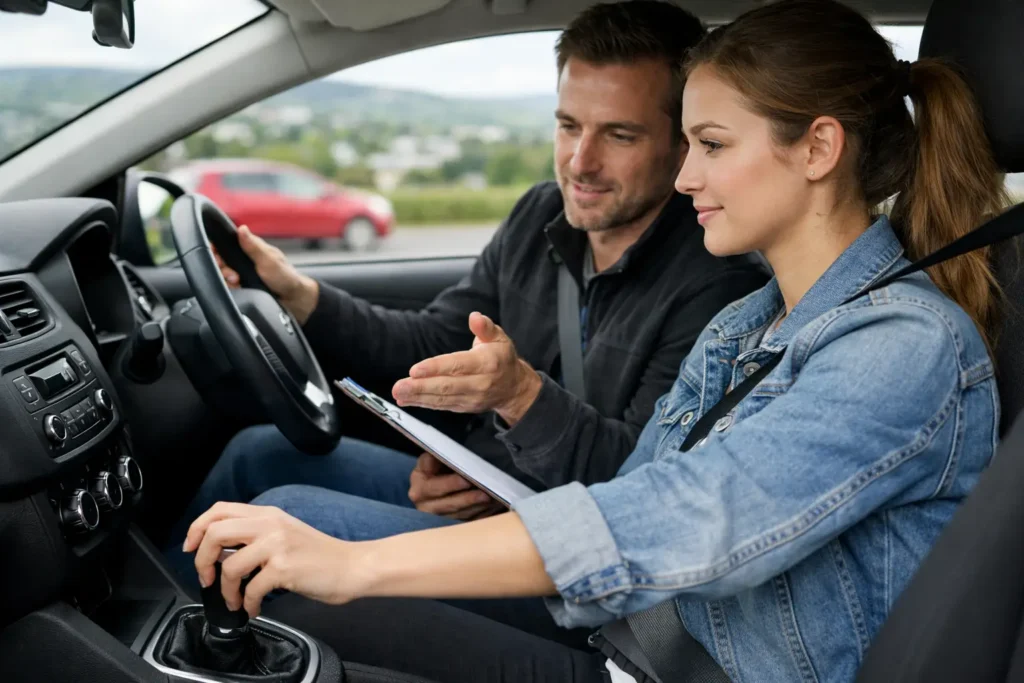
Your first few lessons are usually about foundations. You will get familiar with the cockpit drill, moving off and stopping, clutch control, basic steering and simple road positioning. At this stage, a lot of learners worry about stalling. It happens. The key is learning why it happens and how to recover calmly.
As your lessons progress, you should move into busier situations and more independent driving. That includes meeting traffic safely, emerging at junctions, dealing with roundabouts, changing gears smoothly, handling hills and judging speed on mixed roads. Later on, you will work on manoeuvres, test-level decision making and driving with less support from the instructor.
The best learning experience is one that feels structured but not rigid. You should know what you are working on, what has improved and what still needs practice. That kind of lesson planning helps you feel your progress, which is important when motivation dips or a tricky skill takes longer than expected.
Is manual right for every learner?
Not always, and that is worth saying clearly.
Some learners love the extra control and settle into manual driving quickly. Others find the added workload frustrating, especially if they are anxious, need to pass quickly or simply want the simplest route to independent driving. There is no shame in that. The right choice depends on your confidence, your goals and how you expect to use your licence.
If you want maximum licence flexibility, manual is usually the better option. If you are confident you will only ever want to drive automatic, your priorities may be different. But for learners who can manage the learning curve, manual often pays off later.
The key is getting honest advice rather than being pushed into one option. A dependable driving school will help you choose the route that suits you, not the one that sounds tougher or more impressive.
Learning in Halifax brings its own advantages
Every area teaches you something different. Halifax is useful for learners because it gives you a realistic mix of driving conditions. You are not just learning on quiet roads with easy junctions. You are building skills that prepare you for everyday driving once you pass.
Hills are one obvious example. In a manual car, hill starts can be one of the biggest worries for new drivers. Practising them properly with a qualified instructor helps remove that fear and replace it with a routine you can trust. The same goes for busy roundabouts, changing road layouts and situations where patience matters more than speed.
By learning in the kind of traffic and road conditions you are likely to face after passing, you build practical confidence. That is far more useful than simply feeling good in a lesson. Real confidence comes from knowing you can deal with the road in front of you.
How many manual lessons will you need?
There is no fixed number, and any school that pretends otherwise is oversimplifying it.
The number of lessons you need depends on your previous experience, how often you practise, how quickly you pick up coordination and how comfortable you feel under pressure. Manual learners sometimes need a little longer than automatic learners because there is more to manage at first, but that does not mean the process has to drag on.
Regular lessons usually help more than large gaps between sessions. Consistency keeps skills fresh and makes it easier to build momentum. Some learners prefer weekly lessons, while others choose more intensive training if they need to progress faster. The best approach depends on your schedule, budget and confidence level.
What you should expect is honesty. If you are progressing well, you should be told. If you need more work before your test, you should be told that too. Good tuition is about getting you ready properly, not just getting you booked in quickly.
What makes a good manual driving instructor?
Patience matters, but it is not the only thing. A strong instructor should be calm, clear and able to explain things in a way that makes sense when you are under pressure. Manual driving can feel technical at first, so you need someone who can break it down simply without making you feel behind.
You also want someone who teaches for life, not just for the examiner. That means developing your observation, planning and judgement alongside the practical skills of clutch and gears. It also means giving feedback you can actually use, rather than vague comments that leave you guessing.
At English School of Motoring, that focus on safe driving for life is central to how lessons are delivered. Learners need more than a car and a test date. They need professional tuition, steady support and the confidence that comes from real progress.
Cost, value and booking the right way
Most learners are watching their budget, and rightly so. Cheap lessons are not always good value if progress is slow, the teaching is inconsistent or you spend half the session unsure what you are meant to be improving.
Better value comes from lessons that are well structured, taught by qualified instructors and paced properly so that each session moves you forward. Block booking can help with affordability, but only if the quality of tuition is there as well. Price matters, but so does what you are actually getting for it.
If you are comparing schools for manual driving lessons in Halifax, look beyond the headline cost. Ask whether lessons are one-to-one, whether progress is tracked, whether you can choose a male or female instructor if that matters to you, and whether the teaching style is focused on safe, confident driving rather than rushing you to test standard before you are ready.
Learning to drive manually is not always the quickest route, but it can be one of the strongest investments you make in your independence. When you are taught properly, the gears become second nature, the roads start to feel more manageable and the whole process becomes less about nerves and more about progress.
If you are thinking about starting, the best next step is a simple one – choose lessons that build confidence properly, because the right support at the start makes every mile afterwards feel easier.