
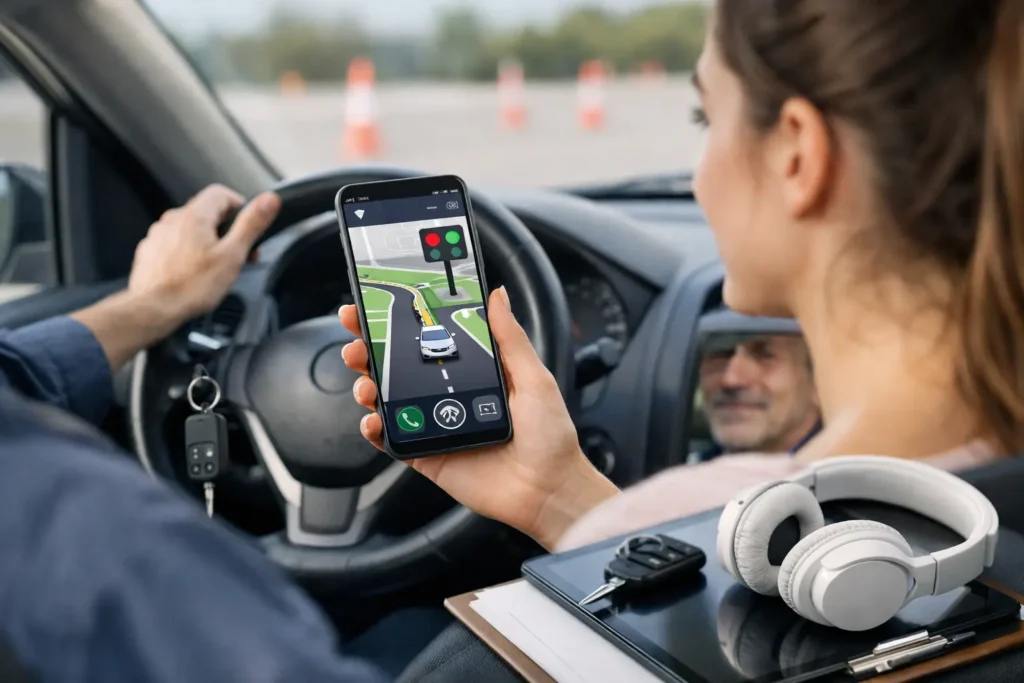
Most learners do not struggle because they are not trying hard enough. They struggle because learning to drive involves several different skills at once – theory revision, hazard awareness, road knowledge, judgement and confidence behind the wheel. That is why the best learner driver apps can be genuinely useful. The right app will not replace proper lessons with a qualified instructor, but it can make your practice more focused, help you stay organised and stop the theory side from becoming a last-minute panic.
If you are learning in places with busy roundabouts, dual carriageways, city traffic and changing road conditions, a bit of structure between lessons makes a real difference. Good apps help you keep momentum. Poor ones just fill your phone with quizzes you stop opening after three days.
What makes the best learner driver apps actually useful?
Not every driving app deserves space on your phone. Some are excellent for theory test preparation but offer little beyond that. Others look polished but give vague feedback or rely too much on gimmicks.
For a learner, the most useful apps tend to do one of three jobs well. They either help you revise the Highway Code and theory questions properly, improve your hazard perception, or support your practical progress by tracking lessons, routes or private practice. The strongest options are usually simple, clear and consistent. You should know what you are working on and whether you are improving.
That matters because driving is not about memorising enough answers to scrape through a test. It is about building safe habits that stay with you after you pass.
Best learner driver apps for theory revision
Official DVSA theory test apps
If your priority is passing the theory test, the official DVSA app is usually the safest place to start. It is built around the real structure of the test, which matters more than flashy design. You want to revise in the same style you will actually face on the day.
The main strength here is trust. The questions and explanations are closer to what you need, and the layout keeps revision practical rather than distracting. For many learners, that reassurance is worth paying for.
The trade-off is that official apps can feel a bit plain. If you are someone who stays motivated through streaks, gamified targets or visual dashboards, you may find it less exciting than third-party options. Still, exciting is not the same as effective.
Theory Test Pro and similar revision platforms
Apps and platforms in this style are popular because they make revision feel manageable. Short mock tests, progress tracking and topic-based practice can help if you are fitting revision around college, work or family life.
These tools are often best for learners who lose confidence when they see a huge bank of questions. Breaking revision into bite-sized sessions makes it easier to keep going. You can focus on road signs one day, stopping distances the next, and gradually build coverage without feeling overwhelmed.
The catch is that convenience can lead to passive learning. If you are tapping through questions quickly without reading why an answer is right or wrong, you are not building proper understanding. That becomes obvious later, especially in hazard perception and practical lessons.
Best apps for hazard perception practice
Hazard perception apps with CGI clips
Hazard perception is where many learners come unstuck. They know the rules, but they do not yet read the road early enough. Dedicated hazard perception apps can help train that awareness by showing developing situations and asking you to spot potential danger before it becomes obvious.
This is useful because hazard perception is not really about quick reactions alone. It is about anticipation. A child near a kerb, a vehicle edging forward at a junction, a cyclist moving around parked cars – these are the signs you need to notice early.
A good hazard app gives plenty of varied clips and explains why a hazard is developing. A weaker one simply marks answers right or wrong and moves on. If you are using one, focus less on chasing a score and more on understanding the pattern behind each clip.
YouTube-style clip apps versus structured practice
Some learners use free apps or video libraries for hazard clips. These can be helpful for extra exposure, especially if money is tight, but they are usually better as a supplement than your main tool.
The issue is consistency. Structured hazard apps tend to be closer to test conditions and better at showing progress over time. Free options can still help you sharpen awareness, but they may not give the same discipline or feedback.
Best learner driver apps for practical lesson support
Driving test route and lesson tracking apps
Some apps are designed to support the practical side rather than the theory. These may let you log lesson hours, record what you covered, track manoeuvres, or review local test route areas.
Used sensibly, that can be helpful. Learners often forget what happened in the previous lesson, especially early on when everything feels new. An app that records progress can remind you that you have already practised junctions, hill starts or parallel parking, even if confidence has dipped.
Test route apps need a bit more caution. Familiarity with local roads can reduce nerves, but there is a difference between becoming comfortable in an area and trying to memorise every turn. The practical test rewards safe driving, observation and decision-making. It does not reward rehearsed steering.
Apps for private practice with parents or family
If you are practising outside lessons, a logging app can be useful for keeping things organised. You can note what roads you used, what went well and what still needs work. That is particularly valuable if your private practice is irregular or split between different supervisors.
It can also stop practice becoming too narrow. Many learners end up repeating the same familiar estate roads because they feel safe. A log shows whether you are actually covering town driving, roundabouts, parking, independent driving and different weather or traffic conditions.
Still, an app cannot judge whether your supervising driver is giving the right advice. That is why private practice works best when it supports professional tuition rather than replacing it.
Which apps are worth your time?
For most learners, a small combination works better than downloading ten different tools. One solid theory app, one hazard perception app and, if you like structure, one lesson tracking app is usually enough.
If you are just starting out, begin with theory and hazard perception. That gives your driving lessons more context because road signs, priorities and developing hazards will make more sense from the start. If you are already taking lessons and preparing for your practical test, progress tracking becomes more useful.
The best learner driver apps are the ones you will genuinely keep using. A simple app opened four times a week is better than an advanced one you abandon after the first weekend.
How to choose the best learner driver apps for you
Start with your weakest area, not what looks most impressive in the app store. If theory revision feels messy, choose an app with clear mock tests and topic practice. If your issue is spotting danger early, go for hazard perception training. If you lose track of what happened in lessons, use an app that logs progress.
Also think about how you learn. Some people do well with repeated short quizzes. Others need fuller explanations and fewer distractions. There is no prize for using the trendiest app if it does not suit the way you study.
Price matters too. A paid app can be worthwhile if it saves time and gives accurate, focused revision. Free apps are not automatically poor, but they can vary in quality. Before relying on one, check whether the content feels current, clear and realistic.
Where apps help and where they do not
Apps are good for repetition. They are good for revision on the bus, in the evening or between lessons. They are good for reminding you that progress comes from regular effort, not from cramming the week before a test.
What they cannot do is teach real judgement under pressure. They cannot recreate the feel of clutch control in traffic, the timing of a busy roundabout, or the nerves that appear when a car is close behind you on a hill start. That is where quality instruction matters.
At English School of Motoring, we see this often. Learners who combine proper lessons with steady app-based revision usually feel more prepared because each part supports the other. The app reinforces the knowledge. The lesson turns that knowledge into safe driving habits.
That is the real standard to judge any app by. Not whether it looks clever, but whether it helps you become calmer, more aware and better prepared when you are actually on the road.
If an app helps you revise little and often, understand your mistakes and arrive at each lesson a bit more confident, it is worth keeping. If it only gives you the illusion of progress, delete it and use that time to practise something that will stay with you long after test day.