
Arriving ready for your theory test should feel straightforward, but missing the right theory test documents can stop you from sitting the test altogether. Your preparation may be excellent, yet a simple paperwork issue at the test centre could mean losing your appointment and having to book and pay again. A few checks before you leave home can protect the progress you have worked hard to make.
The main document you need for a theory test
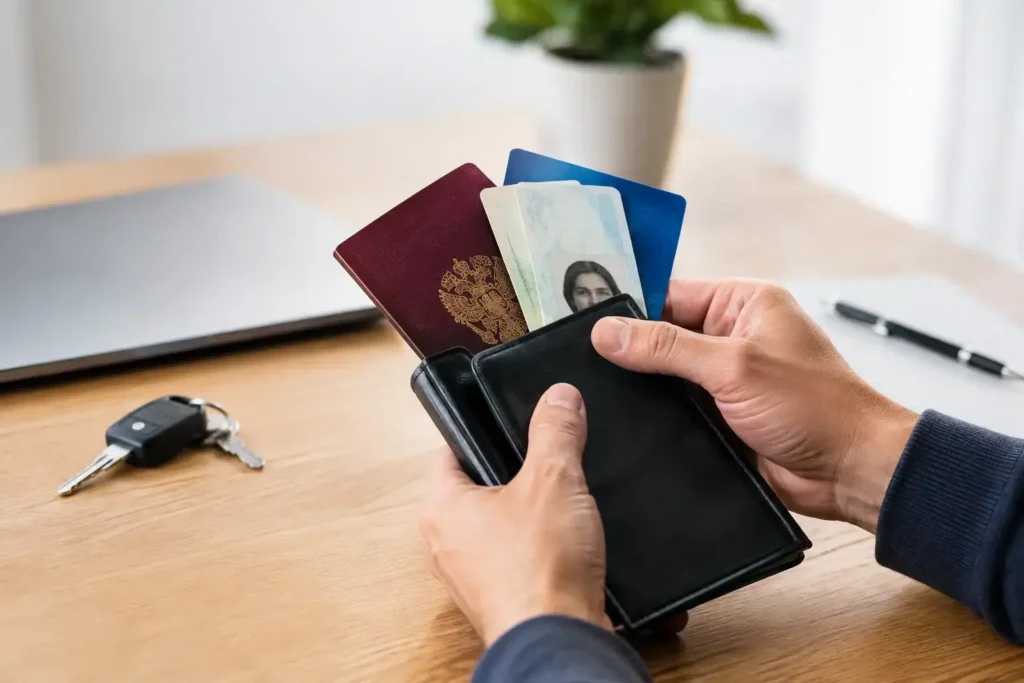
For a car theory test in Great Britain, you must take your valid photocard provisional driving licence. This is the key document the test centre needs to confirm your identity before you are allowed into the test room.
It must be the original physical photocard, not a photograph on your phone, a photocopy or an image saved in an app. The name on your licence should also match the name used when you booked the test. If it does not, speak to the relevant test booking service before the appointment rather than hoping it will be accepted on the day.
Check your licence well ahead of time. Make sure it has not expired, is not damaged beyond recognition and is actually in your wallet, purse or bag the evening before the test. It sounds obvious, but many learners put their licence somewhere safe and then forget where that safe place was when the morning arrives.
If you hold an old-style paper licence
Some drivers still have an older paper driving licence. If this applies to you, the identification rules can be different. You may need to take the original paper licence along with a valid passport to prove your identity.
Do not leave this to chance. Requirements can depend on the type and age of the licence, so check the current instructions given with your booking and resolve any uncertainty before test day. Applying for a replacement or updating a licence can take time, particularly during busy periods.
Is a theory test booking confirmation required?
Your booking confirmation is not usually the primary form of identification, but it is sensible to have it available. Save the confirmation email somewhere you can quickly find it, write down the booking reference, or take a screenshot before you travel.
The confirmation gives you useful details: the test centre address, appointment time, reference number and any instructions relevant to your booking. It also helps if you need to speak to staff about a query on arrival. Just remember that the confirmation does not replace your provisional photocard licence.
If somebody else booked the test for you, ask them to forward the full confirmation immediately. You should know the exact location and time yourself. Turning up at the wrong centre, or confusing a theory test with a practical driving test, is an avoidable and costly mistake.
Check that your details are correct before test day
Theory test documents are not only about what you carry. They are also about whether the details on those documents are current and accurate. If you have changed your name, moved home or replaced a lost licence, take time to make sure your booking and licence information are in order.
A change of address does not normally alter your ability to use a valid licence, but it is still wise to keep your details up to date. A name change is more likely to create an identity problem if your booking is in one name and your licence is in another. You may need to update your licence before booking, or amend the booking where the service allows it.
If your photocard licence has been lost or stolen, order a replacement as soon as possible. Do not assume another form of photo ID, such as a passport, bank card or college ID, will be accepted instead. For most learner drivers, the provisional photocard is the document that matters.
Other things to take to the test centre
While your licence is essential, a calm and organised arrival makes the whole experience easier. Take your booking information and any glasses or contact lenses you normally wear. You may need to meet the eyesight standard before beginning the test, so do not leave your glasses at home simply because the theory test is taken on a computer.
Aim to arrive around 15 minutes before your appointment. Arriving far too early may not mean you can enter immediately, but arriving late can mean you are refused entry. Allow extra time for traffic, bus delays, parking, finding the building and signing in. This matters particularly at city-centre test centres, where parking and access can be less predictable.
Leave unnecessary belongings at home where possible. Test centres have strict rules around mobile phones, watches, bags and other personal items. Staff will explain what needs to be switched off or stored away, but having fewer distractions helps you focus on the two parts of the test: multiple-choice questions and hazard perception.
What happens if you forget your licence?
If you arrive without the required licence, the test centre is unlikely to let you sit the test. Staff must follow identity rules, even if you can show a confirmation email, know your driving licence number or have travelled a long way to get there.
In most cases, you will need to book another test and pay the fee again. That can be frustrating, especially when you feel ready to move on to practical lessons or have a practical test date in mind. The best approach is simple: put your provisional licence with the items you will wear or carry the next day, then check it again before leaving.
Parents and friends can help here too. If they are giving you a lift, ask them to remind you to check for your licence before the journey begins. It is a small favour that could save weeks of delay.
A simple evening-before check
The night before your appointment, take two minutes to check three things: your valid photocard provisional driving licence, your booking time and test-centre address, and your plan for getting there. If you wear glasses or contact lenses, add those to the same place.
Then give yourself a proper break from revision. Last-minute cramming often increases nerves more than it improves your score. Read a few road signs or practise a handful of hazard perception clips if it helps you feel settled, but trust the preparation you have already done.
Prepare for more than the paperwork
Having the right documents gets you through the door. Passing the theory test still depends on understanding the Highway Code, reading situations carefully and recognising developing hazards early enough to respond safely. Memorising answers alone is not the same as understanding why a safe driver would act in a particular way.
That is why quality theory preparation should sit alongside driving lessons, not be treated as a separate hurdle. An instructor can explain how a question connects to real road decisions, from safe following distances and speed limits to vulnerable road users and changing weather conditions. This makes the knowledge more likely to stay with you after the test.
At English School of Motoring, our instructors support learners across the North East and Yorkshire with structured tuition that builds confidence for the theory test, the practical test and safe driving for life. If you are unsure whether you are ready, ask for clear guidance and practise the areas that need attention rather than rushing into a booking.
Put your licence somewhere safe tonight, confirm your journey, and let your preparation do the rest. A well-organised test day gives you the best chance to walk into the centre feeling calm, capable and ready to pass.