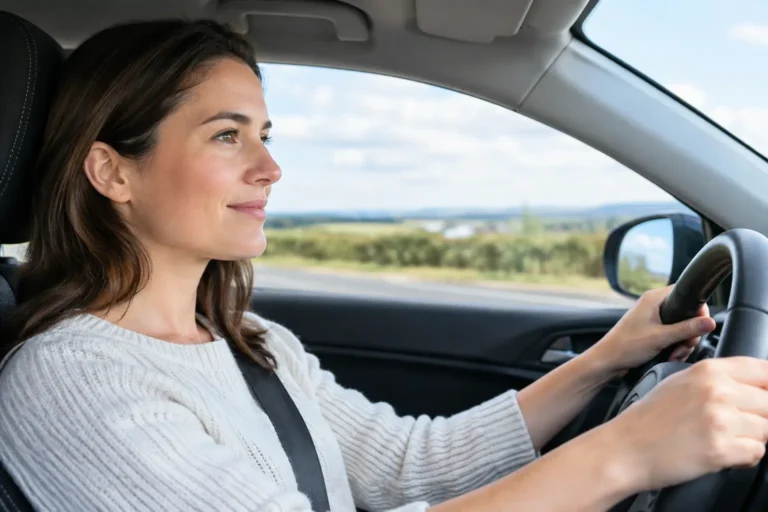
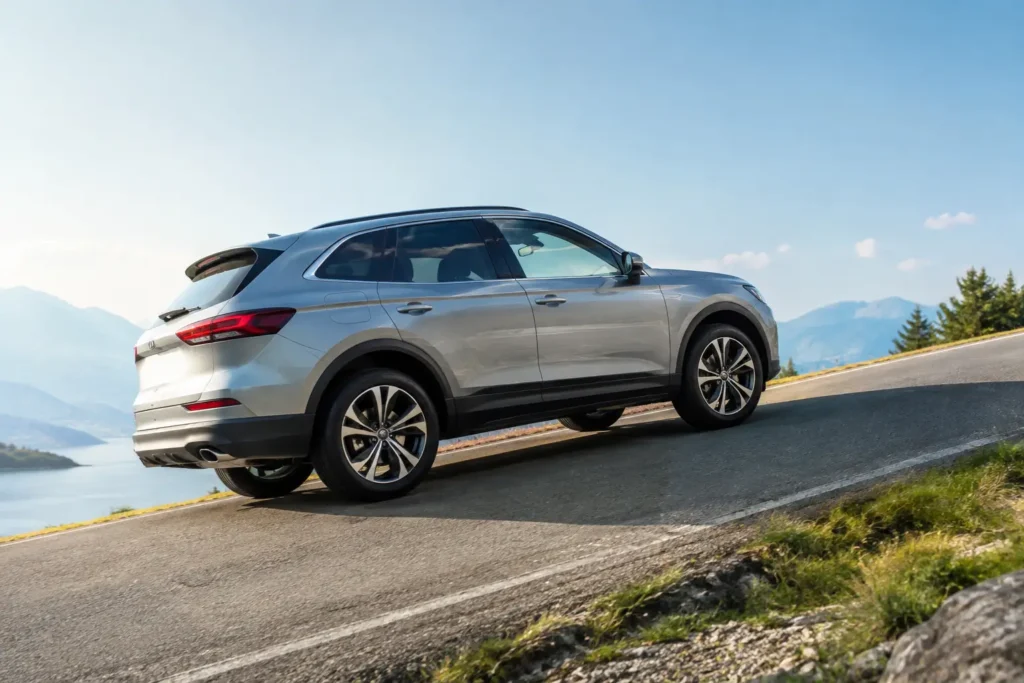
A hill start can feel like a small test of nerve when there is a car close behind, the road is steep and the lights have just changed. The good news is that an automatic pupil handles hill starts without needing to find a clutch biting point. That removes one major task, but safe hill starts still depend on good observation, controlled use of the brakes and knowing what the car may do when drive is selected.
For many learners, especially those who feel anxious about stalling or rolling backwards, an automatic can make early driving lessons feel more manageable. It does not make hills irrelevant. It gives you more attention for the traffic, pedestrians and road ahead – which is exactly where it should be.
Why hill starts feel different in an automatic
In a manual car, the driver has to balance the clutch, accelerator and handbrake. An automatic car has no clutch pedal for the learner to operate, so it cannot stall in the same way when moving off. Once the vehicle is in Drive, it may also creep forwards gently when the foot comes off the brake.
That creeping movement is useful, but it is not a substitute for control. On a shallow hill, the car may hold itself briefly or creep forwards as expected. On a steeper slope, some vehicles can roll back slightly before the engine and transmission take up the drive. The amount varies between vehicles, gradients and conditions.
Modern automatics often have hill-start assist. This system holds the brakes for a short moment after you release the foot brake, giving you time to move to the accelerator. It is a helpful feature, not something to rely on blindly. A qualified instructor will show you how the particular training car behaves, so there are no surprises when you meet a hill in everyday driving.
How an automatic pupil handles hill starts safely
The basic process is straightforward, but it should never be rushed. When you have stopped uphill, keep your right foot firmly on the foot brake and select Drive if it is safe and appropriate to do so. Check your mirrors and blind spot where needed, signal if your move affects another road user, then prepare to move away.
When the road is clear, release the parking brake if it is applied, ease off the foot brake and apply gentle, progressive pressure to the accelerator. Look well ahead rather than down at the controls. The car should move off smoothly without a sudden burst of acceleration.
The aim is not to move away as fast as possible. It is to create a controlled start with enough power to climb the hill, while keeping the steering steady and maintaining awareness of cyclists, pedestrians and vehicles around you. A smooth move-off is safer, more comfortable for passengers and more likely to meet the standard expected on the driving test.
When to use the parking brake
On a busy or particularly steep hill, using the parking brake can give an automatic learner extra security. Keep the foot brake on while stationary, apply the parking brake, then select Drive. When you are ready to go, apply light accelerator pressure until you feel the car wanting to move forwards, release the parking brake and continue smoothly.
This method can prevent rolling back and reduces pressure when another vehicle has stopped close behind. It is also useful if you are waiting for more than a brief moment, such as at temporary traffic lights on a steep road. Your instructor will help you practise both foot-brake and parking-brake starts, because the right approach depends on the gradient and the situation.
What examiners look for on an uphill start
A hill start may happen naturally during a practical driving test. It is not usually announced as a separate manoeuvre, but the examiner will still assess how safely and independently you deal with it.
They will want to see that you keep full control of the vehicle, make effective observations and move off without causing another road user to slow down, stop or change direction. A small rollback is not automatically a serious fault, but rolling back towards a vehicle behind or losing control can be dangerous. This is why learners should practise on different gradients rather than only on quiet, gentle roads.
Good forward planning matters too. If you can see traffic stopping uphill, leave enough space so you do not have to stop unnecessarily on the steepest section. If you must stop, remain calm, secure the car and follow the same routine you have practised in lessons.
Common automatic hill-start mistakes
The most common issue is assuming an automatic will always hold itself on a slope. Some do, some do not, and even hill-start assist only works for a limited time. Keep your foot brake applied until you are genuinely ready to move.
Another mistake is pressing the accelerator too hard. Learners sometimes expect the car to need a large amount of power uphill, then find it moves off more quickly than intended. A small, measured increase in pressure is usually enough. Your instructor can help you recognise the engine sound and vehicle response that indicate you have the right amount.
Looking down at the gear selector is also unhelpful. Before moving, confirm that Drive is selected and keep your attention outside. You need to see the road, mirrors and potential hazards, not the centre console.
Finally, avoid selecting Neutral while waiting at a junction unless your instructor has specifically explained when and why it may be appropriate. In most normal short stops, remaining in Drive with the foot brake applied is simpler and leaves you ready to move when it is safe.
Practising hill starts builds real confidence
The first few attempts may feel awkward, particularly if you have experienced rolling backwards in a manual car or have only driven on flat roads. Repetition changes that. A structured lesson should begin on a quiet, manageable slope before progressing to steeper hills, busier junctions and stop-start traffic.
It is useful to practise uphill starts in changing conditions. A clear daytime hill is different from a wet evening, a loaded car or a queue at a roundabout. You will also need to understand downhill starts, where the car can gather speed sooner than expected and gentle brake control is essential.
At English School of Motoring, automatic lessons in Halifax are taught one to one, with progress monitored as your confidence develops. An experienced instructor will not simply tell you to press the accelerator. They will explain the reason for each action, help you read the road and make sure your technique works beyond the test route.
Automatic does not mean fewer safety skills
Choosing an automatic can be an excellent option for learners who want to focus on road awareness and confidence. It can also suit people taking an intensive course, returning to driving after a break or finding clutch control a barrier to progress. However, an automatic-only licence limits you to automatic vehicles unless you later pass a manual test.
That is a practical trade-off worth considering before you book. For many drivers, the growing number of automatic and electric vehicles means it is no longer a major concern. For others, especially those who may need access to a family manual car or a wider range of work vehicles, a manual licence may offer more flexibility.
Whichever route you choose, the standard should be the same: safe observations, smooth control, sound judgement and the confidence to deal with real roads. The hill will not get flatter, but with the right technique and steady practice, it will soon become just another part of the journey.