The choice between automatic lessons or manual can shape how quickly you feel comfortable behind the wheel, what car you can drive after passing, and how flexible your options are later on. There is no single right answer for every learner. The best choice is the one that helps you build confidence, make steady progress and become a safe driver for life.
For some pupils, an automatic car takes away a major source of pressure from the first lesson. For others, learning in a manual feels worthwhile because it gives them more choice once they have passed. A qualified instructor can talk through both routes honestly, based on your experience, timetable and driving goals.
Automatic lessons or manual: the key difference
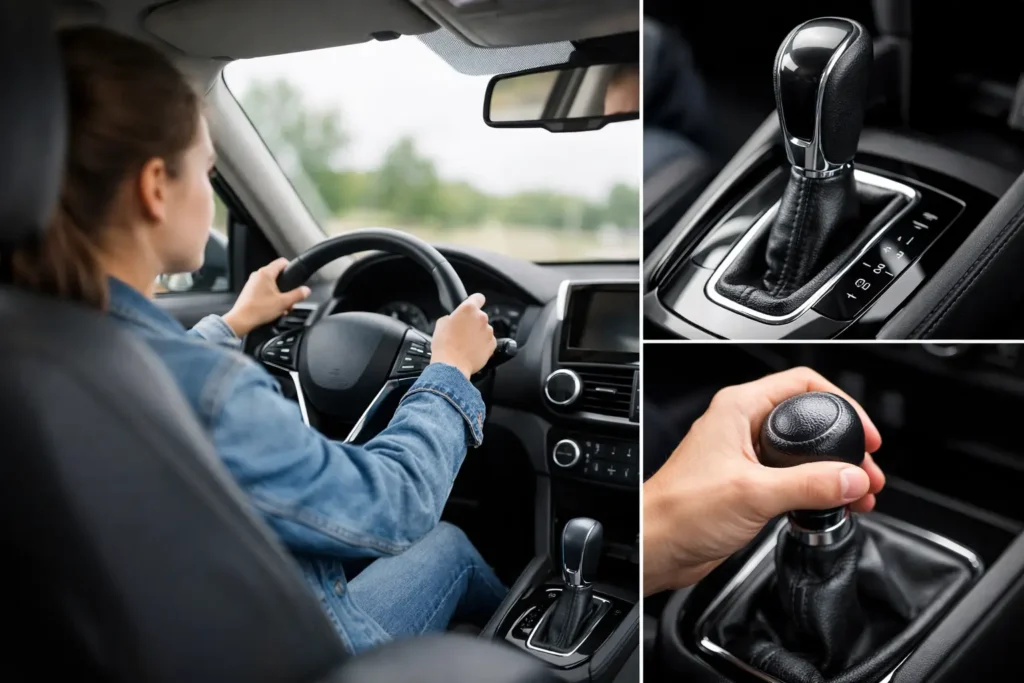
A manual car has a clutch pedal and gears that you select yourself. You will need to learn how to move off smoothly, change gear at the right time, handle hill starts and avoid stalling. These are useful skills, but they can feel like a lot to manage while you are also watching traffic, reading road signs and planning ahead.
An automatic car changes gear for you. With no clutch pedal and no gear changes to think about, many learners find they can focus earlier on steering, observations, road position and decision-making. This can be particularly helpful at busy roundabouts, in stop-start traffic and on unfamiliar roads.
The practical driving test still demands the same safe standard whichever transmission you choose. You must show sound judgement, good observations, controlled manoeuvres and the ability to drive independently. An automatic licence is not an easier pass in terms of safety or test standards. It simply removes the manual gear-control element.
Why learners choose automatic driving lessons
Automatic lessons are often a good fit for pupils who feel anxious about driving or have tried manual lessons and found the clutch and gears distracting. Removing those extra actions can make the early stages feel calmer and more manageable.
They can also suit learners with a limited amount of time. If you are balancing lessons around college, work, childcare or shift patterns, progressing in an automatic may help you reach key driving skills sooner. That does not mean everyone will need fewer lessons – people learn at different speeds – but some pupils find they settle into independent driving more quickly.
Automatic vehicles have become far more common on British roads, especially as electric cars do not use a conventional gearbox. If you expect your first car to be automatic, or your household already has one, learning in an automatic can be a practical decision rather than a compromise.
In Halifax, English School of Motoring currently offers automatic driving lessons for learners who want this route. Availability can vary, so it is sensible to ask about lesson times and instructor availability before making your plans around a preferred transmission.
An automatic licence has a restriction
The main point to understand is that passing your test in an automatic gives you an automatic-only licence. You can drive automatic cars, including electric vehicles, but you cannot legally drive a manual car unless you later pass a practical test in one.
For many people, that restriction will not matter. But it is worth considering if you may need to borrow a family member’s manual car, share driving on a trip, use a manual vehicle for work, or want the broadest possible range of cheaper used cars. Think about your likely needs over the next few years, not only the car you would like to drive this month.
Why manual lessons still make sense
Manual lessons offer flexibility. Passing in a manual car allows you to drive both manual and automatic vehicles, which may be useful when buying a first car or arranging insurance. Manual cars are still widely available in the used market, although the balance is changing as more automatic and electric models appear.
Learning to manage gears can also give some pupils a strong sense of control and achievement. Once clutch control becomes natural, it usually stops taking up much mental effort. Many learners who find it difficult at first go on to drive confidently in all sorts of conditions.
A manual route may be particularly worthwhile if your parents, partner or friends have a manual car that you can practise in alongside professional tuition. Extra supervised practice can be valuable, provided it supports the clear, structured techniques you are learning with your instructor.
That said, do not choose manual purely because someone tells you it is the only proper way to learn. Safe driving is about awareness, planning, responsibility and control. A confident automatic driver who makes good decisions is better prepared for the road than a stressed manual learner who is being pushed into a route that does not suit them.
Cost, lesson numbers and the value of the right choice
It is natural to ask which option is cheaper. The answer depends on local availability, your individual progress and how many lessons you need. Automatic tuition can sometimes cost more per lesson because there are fewer automatic instructors and dual-controlled automatic cars can be less readily available. Manual lessons may have more choice of instructors and appointment times in some areas.
However, the hourly price is only one part of the picture. If you are struggling with gear changes and repeatedly losing confidence, choosing automatic might be better value overall if it helps you learn consistently. Equally, if you want a full manual licence and have access to a manual practice car, manual lessons may offer better long-term value.
Avoid setting a target number of lessons before you start. A good instructor will monitor your progress, identify the skills that need more practice and prepare you for the test only when you are driving safely and consistently. Rushing to the test before you are ready can cost more in the long run and does little for your confidence.
Consider the roads you will drive most often
Your local driving environment matters. In city traffic, frequent stopping and starting can make an automatic feel less tiring, especially for new drivers. Busy routes around Leeds, Bradford, Newcastle or Sunderland demand concentration at junctions, crossings and roundabouts, so some pupils appreciate having one less task to manage.
On the other hand, learners in rural or mixed-road areas may enjoy developing manual gear control as they gain experience with changing speeds, gradients and country roads. Neither setting makes one licence better than the other. It simply changes where you may notice the difference most.
Your instructor should introduce these situations gradually. Early lessons need a calm environment where you can build basic control. As your confidence grows, you should practise the roads, traffic conditions and manoeuvres that will make you a capable everyday driver, not just someone who can complete a test route.
Make the decision with confidence
If you are unsure, be open about what is worrying you. Are you nervous about stalling? Do you need to pass for a job? Will you need access to a manual car? Have you driven before, or are you starting from scratch? These answers are more useful than following a friend’s choice.
A professional instructor will not pressure you towards a transmission that does not match your needs. They should explain what each route involves, keep track of your progress and give you clear feedback at every stage. Good tuition is personal: it meets you at your current level and moves you forward at a pace that is challenging but realistic.
Whether you choose automatic or manual, give yourself permission to learn properly. Book lessons at a regular pace, practise safely where possible and focus on becoming calm, observant and responsible. The right car is the one that lets you put your attention where it belongs – on the road ahead.