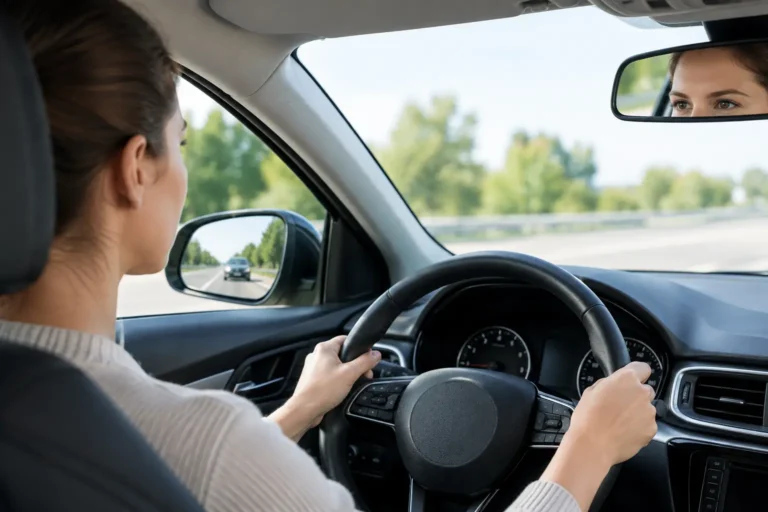

Passing your practical test is a brilliant achievement, but it is also the point where you start making driving decisions without an instructor beside you. Pass Plus courses North East drivers choose are designed to bridge that gap, giving newly qualified motorists more experience on the roads and conditions that can feel daunting at first.
For many drivers, the first independent trip on a busy dual carriageway, a dark country road or into an unfamiliar city brings a different kind of pressure to the driving test. Advanced post-test training gives you time to build confidence in those situations with an experienced instructor there to guide you. The aim is simple: safer driving for life, not just getting through the test.
What a Pass Plus course can help you improve
Most learners gain the skills needed to pass their test on familiar local roads, in daylight and under carefully managed conditions. That is the right place to start, but everyday driving soon asks more of you. You may need to join fast-moving traffic, deal with heavy rain, read unfamiliar signs or plan a longer journey without relying on someone else.
A Pass Plus course focuses on developing judgement, awareness and forward planning after you have qualified. It is not about rushing, showing off or simply driving faster. It is about learning how to spot developing hazards early, choose a safe position and speed, and stay calm when the road does not go as expected.
This extra experience can be particularly useful if you passed recently, have not driven much since your test, or are about to start commuting, travelling to university or taking on a job that involves regular driving. It can also suit drivers who passed in an automatic car and want more structured road experience. The best route depends on your confidence, the type of journeys you expect to make and the skills you want to strengthen.
Pass Plus courses in the North East: what to expect
A well-planned course should be practical, one-to-one and shaped around your current ability. Your instructor will first discuss your driving experience, any areas you avoid and the journeys you are likely to make. That means the training can feel relevant from the first session rather than like repeating lessons you have already completed.
Traditional Pass Plus-style training covers the situations that newly qualified drivers may have had limited exposure to while learning. These commonly include town driving, rural roads, driving at night, dual carriageways, motorways and dealing with different weather conditions. Not every session can recreate every type of weather safely, of course, but your instructor can explain how rain, wind, fog, ice and low sun should change your driving decisions.
Motorways and dual carriageways
Joining a motorway for the first time can be intimidating. The pace is higher, traffic gaps can appear smaller and drivers must make decisions earlier. Training helps you practise joining safely, maintaining a suitable following distance, using lanes correctly, overtaking with care and leaving the road in good time.
The same principles matter on dual carriageways around the North East, where slip roads, roundabouts and changing speed limits require full attention. The focus is on observation and planning, not on trying to keep up with the quickest vehicle around you.
Rural roads and night driving
Rural roads present a different challenge. Bends can hide oncoming vehicles, road surfaces may change suddenly and tractors, cyclists, horses or wildlife can appear with little warning. Drivers need to understand why the posted limit is a maximum, not a target, and how to use the information available from hedges, signs, road markings and the movement of other vehicles.
Night driving requires a calmer, more measured approach. Headlights reduce what you can see, glare can affect judgement and fatigue becomes a genuine risk. An instructor can help you develop safe routines for adjusting speed, using lights correctly and recognising when a journey should wait.
Who benefits most from advanced driving training?
A Pass Plus course is not only for nervous drivers. Confident new drivers can benefit just as much, particularly if that confidence has not yet been tested in demanding conditions. In fact, the period immediately after passing is when good habits can either become established or start to slip.
You may find it especially worthwhile if you are buying your first car, planning to drive to work each day, regularly carrying friends or family, or moving from short local journeys to longer routes. Parents often see it as a sensible next step for a son or daughter who has passed but needs more real-road experience before driving independently every day.
It is also a practical option for anyone returning to driving after a break. In that case, the training may need to focus less on the traditional course subjects and more on rebuilding control, confidence and decision-making at a comfortable pace.
Choosing Pass Plus courses North East drivers can rely on
The value of post-test training comes from the instructor, not simply the name of the course. Look for a qualified instructor who listens to what you need, explains decisions clearly and is prepared to challenge unsafe habits in a supportive way. You should feel able to ask questions, make mistakes and improve without being rushed.
Local knowledge matters too. An instructor who knows the roads around Newcastle, Sunderland, Durham, Middlesbrough and surrounding areas can select suitable routes that progressively build experience. Quiet roads are useful for revisiting a skill, while busier urban routes, open A-roads and motorway links can be introduced when you are ready.
English School of Motoring provides structured, safety-first tuition with experienced instructors and dual-controlled vehicles, so you can practise more demanding driving situations with proper support. Progress should be monitored throughout the course, giving you a clear picture of what has improved and what is worth continuing to work on afterwards.
Price matters, especially after the cost of learning and buying a first car. However, the cheapest option is not always the best value if the training is rushed or does not address the roads you will actually use. Ask how the course is structured, how much practical driving is included and whether the instructor can adapt sessions to your experience.
Questions to ask before you book
Before arranging a course, be clear about the outcome you want. If motorway driving is your main concern, say so. If you are anxious about night driving or country lanes, mention that at the start. A good instructor will use this information to plan meaningful sessions rather than working from a fixed script alone.
It is also sensible to ask about the current course format and any documentation issued on completion. Insurance discounts have sometimes been associated with Pass Plus training, but these are not guaranteed and insurer requirements vary. Treat any potential saving as a possible bonus, not the main reason to take the course. The real benefit is becoming a more capable driver who is better prepared to avoid costly and dangerous mistakes.
You should also check that you hold a full driving licence before booking and that the training vehicle and meeting points suit your needs. If you have access to your own car, discuss whether training in it is appropriate. Learning in a dual-controlled car is often the safer choice when tackling unfamiliar or higher-speed situations for the first time.
Build confidence one journey at a time
No course can remove every risk from driving, and confidence should never mean complacency. What good advanced training can do is give you a stronger routine for reading the road, managing pressure and making safer choices when conditions change.
If you have passed your test but do not yet feel fully prepared for the journeys ahead, booking post-test training is a positive decision. Speak to a local instructor about your experience and the roads you want to feel confident driving on, then take the next step at a pace that keeps safety first.